|
The Column, No. 155:
The Struggling Gun Industry and Tariffs Opinion by Randy Wakeman 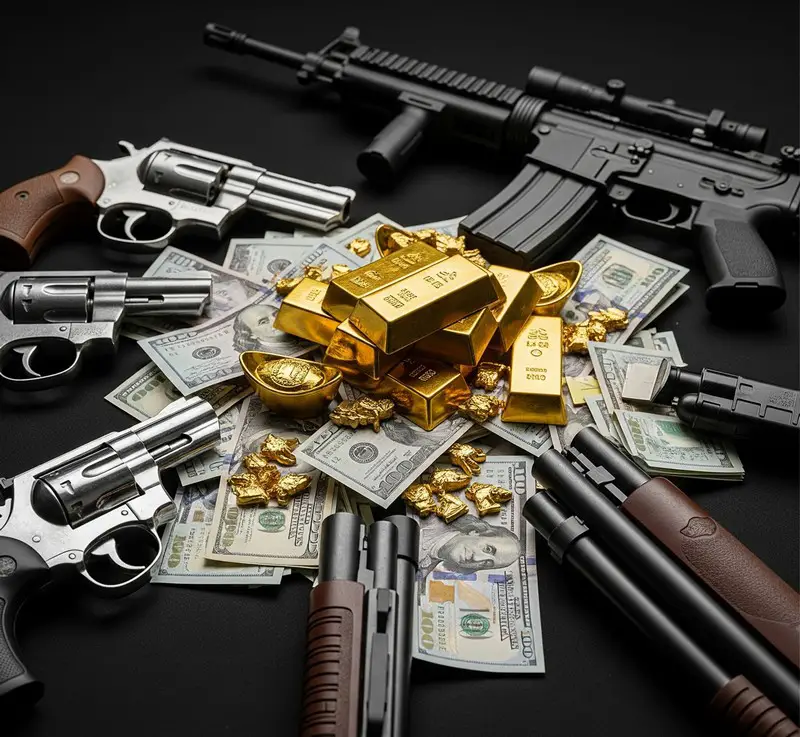
Firearm sales in the U.S. continue to drop. Americans bought 15.3 million guns in 2024, down from a record 21.8 million in 2020, according to estimates. Gun manufacturers have also scaled back. Federal data shows that between 2021 and 2023, the most recent year available, the number of guns produced annually for the U.S. market fell 36 percent, from 23.4 million to 14.96 million. Gun sales now are back at 2013 levels. Several brands like RemArms and Ithaca are essentially gone from the marketplace. Other brands, like Mossberg, seem to be in deep trouble. Mossberg in Eagle Pass, Texas, has produced guns in the U.S. from Mexican steel: steel that is now subject to a 50% tariff under Section 232 of the Trade Expansion Act of 1962. The 50% tariffs on steel, aluminum, and now apparently as of August 1, copper, throw companies that rely heavily on imported metals into disarray. No one knows where tariff rates will finally land, or if the country-specific tariffs will survive court challenges. We do know that economists, analysts, and other prognosticators that have screamed instant inflation, recession, and market crash have been completely wrong thus far. There is a lag between tariff announcements and actual price changes as many companies hold 6-9 months of raw materials unaffected by sector price changes. Although tariff announcements change constantly, firearms that have cleared customs prior to August 1 have a 10% tariff. If you think that tariffs are going to be anywhere near the floated 30% EU tariffs or 25% Japan tariff, then now would be the time to buy. The goal of restoring American manufacturing is laudable, but the reality is often a very long ways away from the goal: The number of U.S. workers employed in the manufacturing industry peaked at 19.6 million jobs in 1979, according to the Bureau of Labor Statistics. The sector shed over 6 million jobs since then, and roughly 12.7 million people work in manufacturing today. While this a lot of chatter, gun prices do not matter a great deal, as good quality guns do not wear out easily or quickly assuming just ordinary care. Any number of firearms handily outlast cell phones, flat screens, lawnmowers, sump pumps, air conditioners, and roofs. Once you have had enough birthdays, it becomes readily apparent that compared to continuous and ongoing expenses like insurance and property tax, the price of a firearm does not move the needle much at all. As for tariffs, we know that sector-based tariffs tend to do two things: save jobs, and raise prices. The Remington Model 11 was the first semi-auto shotgun produced in the United States, in 1905. In 1905, the US tariff landscape was shaped by the Dingley Act of 1897, which was the highest tariff in US history at the time, averaging around 50% in its first year. The Dingley Act was in effect for twelve years. It was the reason FN could not reasonably export Browning Auto-Fives into the United States and the reason Remington produced the Model 11 under license from FN. Back then, the United States did not have the buying power of today, for in 1905 the U.S. GDP was estimated to be around 14% of the world. In 2025, the U.S. has about 26.11% of the world's GDP: still a clear drop from the 33.62% of 1985 and Ronald Reagan. Do we want strong jobs and strong prices, or weak jobs and weak prices? |